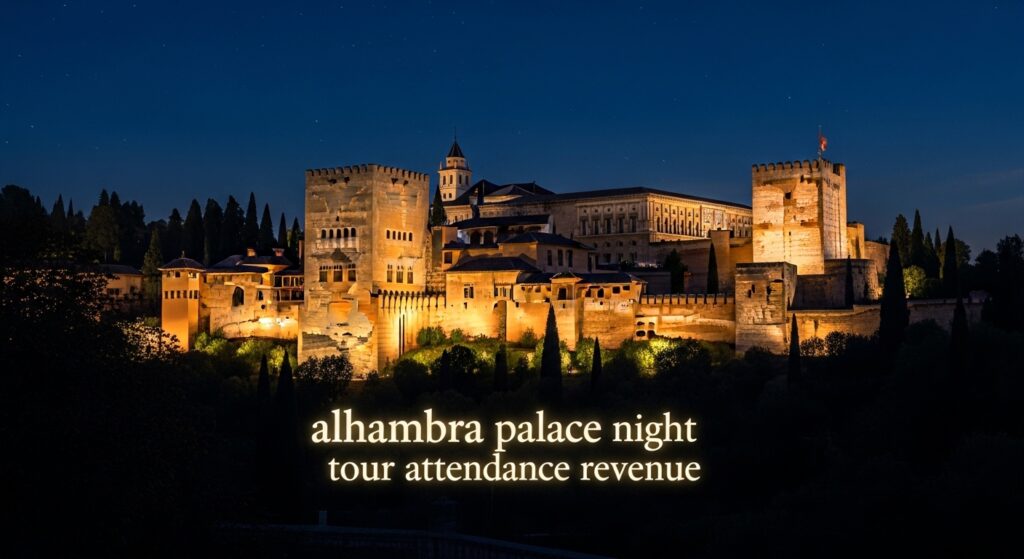
alhambra palace night tour attendance revenue
The Alhambra Palace in Granada, Spain, is one of the most visited historical landmarks in Europe, attracting millions of visitors every year. Among its most fascinating experiences is the night tour, where the palace transforms into a quiet, atmospheric masterpiece under soft lighting. This unique experience has not only boosted cultural tourism but also plays a significant role in overall ticket sales and tourism-generated income.
Understanding the Alhambra Palace night tour attendance revenue gives insight into how heritage tourism supports local economies, manages visitor flow, and balances preservation with profitability. This guide explores everything from visitor numbers and pricing structures to economic impact, operational strategies, and long-term tourism sustainability.
Historical Importance of the Alhambra Night Experience
The Alhambra Palace is a UNESCO World Heritage Site, originally built during the Nasrid Dynasty in medieval Spain. Its night tours were introduced to offer a more intimate experience compared to daytime visits, allowing visitors to appreciate the intricate Islamic architecture, courtyards, and palatial halls in a calm environment.
Night tours were developed not only for cultural enrichment but also to distribute visitor traffic more evenly throughout the day. This shift has helped reduce daytime overcrowding, which was affecting both visitor experience and conservation efforts. Over time, the night visit program became a premium offering, influencing overall attendance patterns and contributing significantly to ticket-based revenue.
Today, these tours are considered one of the most exclusive cultural experiences in Spain. The limited capacity and controlled scheduling make them highly desirable, often selling out weeks in advance. This exclusivity directly impacts the financial model behind the Alhambra Palace night tour attendance revenue, increasing its value per visitor compared to standard daytime access.
Visitor Demand and Seasonal Attendance Trends
Attendance at the Alhambra night tours varies depending on season, tourism flow, and global travel trends. Peak seasons typically include spring and summer when international tourism in Spain is at its highest. During these periods, ticket demand often exceeds supply, creating waiting lists and early booking requirements.
In contrast, winter months see a decline in visitor numbers, although night tours still maintain steady attendance due to domestic tourism and cultural travelers. This seasonal variation plays a key role in forecasting revenue and managing operational costs.
Below is a simplified overview of attendance patterns:
| Season | Attendance Level | Tourist Profile | Revenue Impact |
|---|---|---|---|
| Spring | Very High | International tourists | Peak revenue |
| Summer | High | Mixed global visitors | Strong revenue |
| Autumn | Moderate | Cultural travelers | Stable revenue |
| Winter | Low to Moderate | Domestic visitors | Reduced revenue |
The Alhambra Palace night tour attendance revenue is strongly influenced by these fluctuations, making seasonal pricing and ticket allocation essential for financial stability.
Ticket Pricing Structure and Revenue Generation
Ticket pricing for the Alhambra night tours is designed to reflect exclusivity, preservation costs, and visitor experience quality. Prices are generally higher than daytime entry due to limited capacity and enhanced ambiance.
There are usually different categories, including general admission, guided tours, and combined packages. Guided tours tend to generate higher revenue per visitor, as they include expert explanations of the palace’s history and architecture.
Here is a breakdown of typical pricing structures:
| Ticket Type | Features | Price Range Impact |
|---|---|---|
| Standard Night Entry | Self-guided access | Medium |
| Guided Night Tour | Expert-led experience | High |
| Combined Packages | Includes gardens or daytime entry | Very High |
Revenue from ticket sales is the core component of the Alhambra Palace night tour attendance revenue system. Because of limited availability, even small changes in ticket pricing or demand can significantly influence overall earnings.
Role of Tourism Management in Revenue Optimization
Efficient tourism management plays a critical role in balancing visitor experience with revenue generation. The Alhambra administration carefully regulates ticket distribution, group sizes, and time slots to avoid overcrowding and preserve the site.
Advanced booking systems are used to control access, ensuring that each time slot is fully optimized without exceeding capacity limits. This controlled flow not only protects the monument but also maximizes revenue per available slot.
Key management strategies include:
- Strict visitor caps per night
- Timed entry scheduling
- Digital ticketing systems
- Dynamic allocation of guided tours
These systems ensure that the Alhambra Palace night tour attendance revenue remains stable while maintaining high visitor satisfaction.
Economic Impact on Granada and Surrounding Regions
The night tours significantly contribute to the local economy of Granada. Beyond ticket sales, revenue flows into hotels, restaurants, transportation services, and local businesses.
Tourists attending the night tours often extend their stay in the city, increasing overall spending. This multiplier effect enhances the importance of the Alhambra as a cultural and economic driver.
| Economic Sector | Impact Level | Description |
|---|---|---|
| Hospitality | High | Hotels benefit from overnight stays |
| Food Services | High | Increased restaurant traffic |
| Transport | Medium | Taxi and tour services |
| Retail | Medium | Souvenir and local crafts sales |
The Alhambra Palace night tour attendance revenue indirectly supports thousands of jobs and contributes to regional economic stability.
Cultural Tourism and Visitor Experience Value
The night tour is designed to provide a more immersive cultural experience compared to daytime visits. The lighting highlights architectural details that are less visible during daylight, creating a unique atmosphere.
This enhanced experience increases visitor satisfaction, which in turn drives repeat visits and positive word-of-mouth marketing. Cultural tourism relies heavily on emotional engagement, and the Alhambra night experience excels in this area.
Visitors often describe the experience as more personal and reflective, which increases perceived value. This perception directly influences willingness to pay higher ticket prices, strengthening overall revenue performance.
Capacity Limits and Controlled Entry System
One of the key factors affecting attendance and revenue is strict capacity control. The Alhambra Palace limits the number of visitors per night to protect the structure and ensure a high-quality experience.
This limitation creates scarcity, which increases demand and allows for premium pricing strategies. However, it also means that revenue growth is not based on unlimited expansion but on optimization.
Key capacity controls include:
- Fixed number of nightly entries
- Time-slot segmentation
- Group size restrictions
- Seasonal adjustments
These measures ensure sustainable growth in Alhambra Palace night tour attendance revenue without damaging the heritage site.
Revenue Comparison: Day vs Night Tours
Night tours generally generate higher revenue per visitor compared to daytime visits due to pricing and exclusivity. However, daytime tours still account for the majority of total attendance.
| Tour Type | Visitor Volume | Revenue Per Visitor | Overall Contribution |
|---|---|---|---|
| Day Tours | Very High | Moderate | Largest total share |
| Night Tours | Low | High | Premium revenue segment |
The balance between both formats is essential for financial sustainability. Night tours act as a premium revenue enhancer rather than a replacement for daytime tourism.
Digital Booking Systems and Revenue Efficiency
Modern digital booking platforms have transformed how tickets are sold and managed. Online reservation systems allow real-time availability tracking and reduce manual processing errors.
These systems also help prevent overbooking and allow dynamic pricing adjustments based on demand. This improves both visitor experience and revenue predictability.
A key benefit is global accessibility. International tourists can book in advance, ensuring higher occupancy rates for night tours, which directly boosts Alhambra Palace night tour attendance revenue.
Marketing Strategies Driving Night Tour Demand
Marketing plays a major role in increasing awareness and demand for the Alhambra night experience. Campaigns often focus on visual storytelling, highlighting the magical nighttime ambiance of the palace.
Social media, travel influencers, and cultural tourism platforms contribute significantly to global visibility. Seasonal campaigns also encourage early bookings during peak travel months.
Effective strategies include:
- Visual storytelling campaigns
- Travel partnership promotions
- Cultural heritage branding
- Early-bird booking incentives
These efforts ensure consistent demand and support long-term revenue growth.
Sustainability and Preservation Funding
A portion of ticket revenue is allocated to preservation and restoration efforts. This ensures that the Alhambra remains structurally and visually intact for future generations.
Night tours, due to their premium pricing, contribute significantly to conservation funding. This creates a sustainable cycle where tourism revenue directly supports heritage protection.
Without this financial model, maintaining such a large historical site would be significantly more challenging.
Visitor Experience Challenges and Operational Costs
Operating night tours comes with higher logistical costs compared to daytime visits. These include lighting systems, security, staffing, and conservation monitoring.
Despite higher ticket prices, these operational costs must be carefully managed to maintain profitability. Balancing visitor comfort with preservation needs is a constant challenge.
Still, the premium nature of night tours allows these costs to be covered while maintaining strong revenue performance.
Global Tourism Trends Affecting Attendance
International travel trends strongly influence attendance levels. Economic conditions, travel restrictions, and airline connectivity all impact visitor numbers.
When global tourism is strong, night tour bookings rise sharply. Conversely, during downturns, domestic tourism becomes more important in maintaining revenue stability.
The Alhambra Palace night tour attendance revenue is therefore closely tied to global mobility patterns.
Future Outlook for Night Tour Revenue Growth
The future of Alhambra night tours looks promising, especially with increasing interest in cultural and experiential travel. Demand for immersive heritage experiences continues to grow globally.
Technological improvements in booking systems, virtual previews, and personalized tour options are expected to enhance visitor engagement and revenue potential.
However, growth will remain controlled due to preservation limits, meaning future increases in revenue will depend more on pricing optimization than visitor expansion.
Conclusion
The Alhambra Palace night tour is more than a cultural experience. It is a carefully managed tourism product that balances heritage preservation with strong economic performance. The Alhambra Palace night tour attendance revenue reflects a system built on exclusivity, sustainability, and global demand.
By combining controlled capacity, premium pricing, and strong tourism management, the Alhambra continues to generate significant economic value while preserving its historical legacy.
FAQs
What makes the Alhambra night tour different from daytime visits?
Night tours offer a quieter, more atmospheric experience with limited crowds and enhanced lighting that highlights architectural details.
How does the night tour affect overall revenue?
It generates higher revenue per visitor due to premium pricing and exclusive access, even though total capacity is lower.
Are tickets for night tours difficult to get?
Yes, they often sell out in advance, especially during peak travel seasons.
Why are visitor numbers limited?
To protect the historic structure and ensure a high-quality visitor experience.
Do night tours contribute to preservation?
Yes, a portion of revenue is used for restoration and maintenance of the palace.